
Can You Curl Hair Extensions? What Actually Works
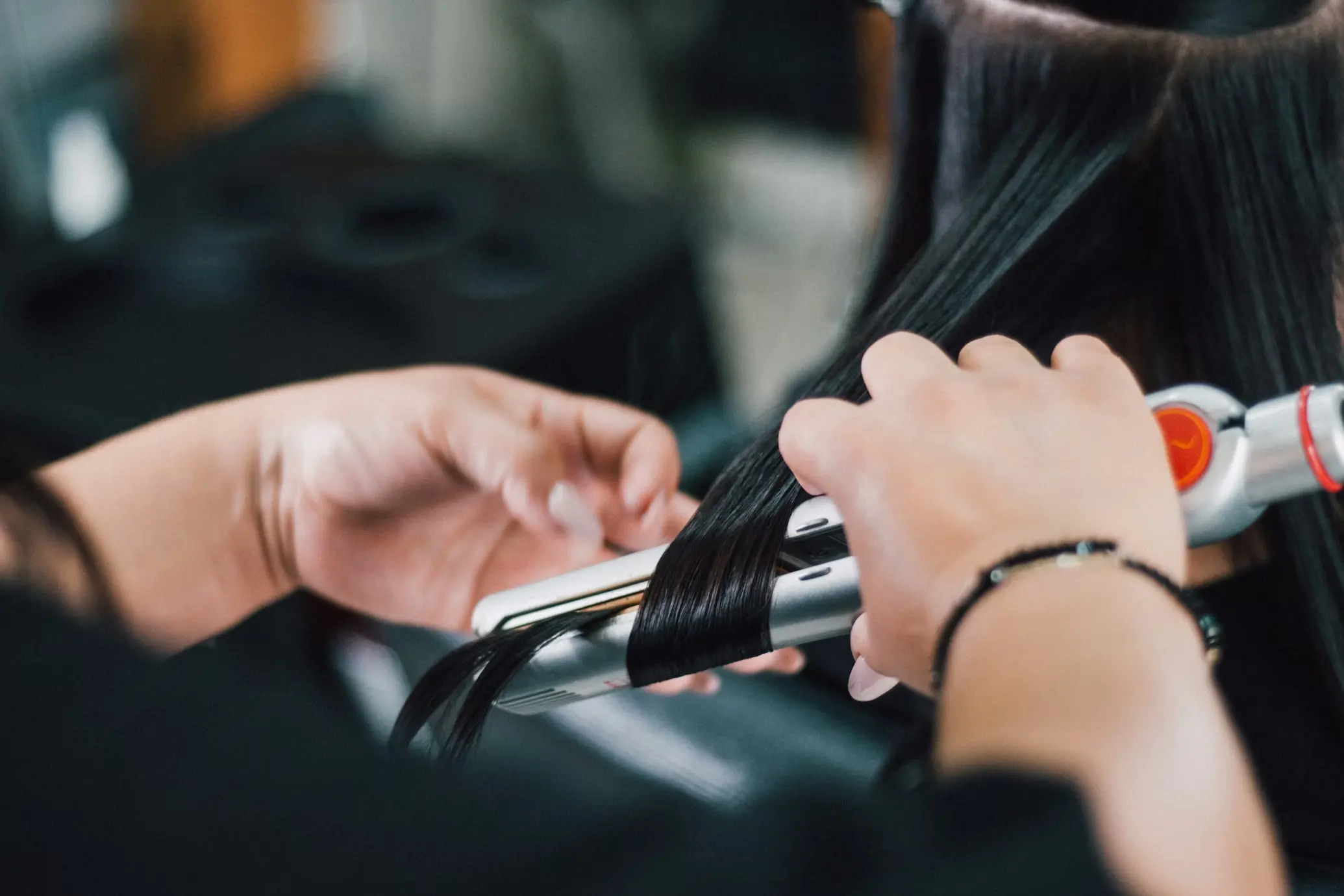
Curling Hair Extensions: The Honest Guide to What Works
You've just had your extensions fitted. They look incredible — full, seamlessly blended, exactly the length you wanted. Now you're standing in front of the mirror with a curling wand in your hand, wondering whether you're about to ruin a serious investment. Can you curl hair extensions? And will the curl actually hold?
The short answer: yes, you can curl quality human hair extensions, and yes, the curl will hold — for a day or two. After washing, it drops out. That isn't a flaw or a failure. It's basic chemistry. Understanding why it happens means you'll never be caught out by it, and you'll know exactly what heat tools, temperatures, and techniques give you the best result.
There's a bigger question underneath this one, though: why do some extensions hold a curl beautifully while others go limp within an hour? The answer comes down to the hair's structure — specifically, what's happened to the cuticle before those extensions ever reached a salon.
Hair Extension Specialist & Founder of FAKE
With over 13 years of experience specialising in keratin bond and micro ring hair extensions, Kylie has completed over 5,000 individual fittings. She hand-blends and colour-matches premium Eastern European hair in-salon at FAKE in Bedale. This post answers the question she hears at almost every styling appointment. She serves clients across North Yorkshire, County Durham, and the North of England.
Why Heat Curls in Hair Extensions Are Always Temporary
When you run a curling wand through your hair — your own or extensions — you're not permanently changing the hair's structure. You're exploiting a very specific property of keratin.
Hair is made almost entirely of keratin protein. [1] That protein is held together by several types of bonds, and the ones that matter most for heat styling are hydrogen bonds — weak, temporary connections between keratin chains that give hair its shape on any given day. Hydrogen bonds are highly sensitive to both heat and water. When heat is applied, these bonds break. The hair is then held in its new curved position while it cools, the hydrogen bonds reform around that shape, and the result is a curl. [2]
The catch? Water does exactly the same thing. The moment those hydrogen bonds meet moisture — from washing or rain on a rainy North Yorkshire morning — they break again and reset to the hair's natural, straight resting state. That's why a heat curl on straight extensions will always wash out. It isn't a problem with your technique or your tools. It's just hydrogen bond chemistry.
The only way to make a curl genuinely permanent is to break the hair's disulfide bonds — the robust, structural bonds that determine whether your natural hair is straight, wavy, or curly. That's what a perm does, using chemicals like thioglycolic acid. [2] Heat styling doesn't touch disulfide bonds. So any curl you create with a wand on straight extensions is, by definition, temporary.
This matters because it resets expectations. You're not doing anything wrong when the curl drops after washing. You're just working within the chemistry of straight hair.
Why Cheap Extensions Can't Hold a Curl at All
Here's where it gets more interesting — and where the real quality divide shows up.
Not all human hair extensions respond to heat in the same way. Quality hair, with its cuticle layer intact and all strands aligned root to tip, behaves almost exactly like healthy natural hair. Apply heat, release, cool — the curl forms, sets, and holds for a day or two. Cheap extensions do something quite different: the curl forms weakly, drops within an hour or two, and the hair often feels dry and glassy rather than soft.
The reason is the cuticle, and what's been done to it.
The cuticle is the outermost protective layer of each hair strand — millions of microscopic scales all pointing in the same direction, like roof tiles. In lower-grade extensions, hair is often collected from multiple sources, meaning strands are mixed in random directions. Left as-is, that would cause instant tangling. The industry solution is an acid bath: the hair is submerged in a chemical solution that strips the cuticle away entirely, eliminating the directional mismatch. [3]
To make the hair feel soft and look shiny again after the acid bath, manufacturers coat each strand in silicone. And it works — initially. Fresh out of the packet, acid-stripped, silicone-coated hair can feel luxurious. But the silicone is not permanent. It washes off over the first few shampoos, and once it's gone, what's underneath is structurally compromised hair with no cuticle left to regulate moisture or hold a shape. That hair won't hold a heat curl, because there's no healthy keratin architecture left to form and hold new hydrogen bonds. It will also tangle, dry out, and degrade quickly. [3]
When silicone-coated hair meets heat tools, there's an added risk: silicone begins to break down under high temperatures, which can create weak points in the shaft and accelerate breakage. [3]
The contrast with quality, cuticle-intact hair is stark. When the cuticle is healthy, the hair shaft responds to heat the same way your own hair does — hydrogen bonds break cleanly, reform cleanly, and the curl holds properly until the next wash. No glassy feel. No limp drop within an hour.
The Right Temperature for Curling Hair Extensions
Extensions have one important difference from your natural hair: they receive no moisture or nutrition from your scalp. That means they can dry out faster under repeated heat exposure, and they don't self-repair the way living hair does. Temperature discipline matters.
The range to work in: 160–180°C. That's enough heat to break hydrogen bonds and set a curl, without cooking the hair shaft or accelerating dryness.
Most professional-grade tools — GHD, Cloud Nine, BaByliss — allow you to set a precise temperature. Use that control. The instinct to "turn it up to get the curl to hold" is counterproductive: excessive heat doesn't make curls last longer; it damages the hair structure so that it holds less well next time. [4]
A few tool-specific notes:
- Curling wands (no clip) create the most natural-looking wave and are kinder on the bonds than tools with clips, which can catch and pull.
- Flat irons with a wave bar give a relaxed S-wave and are excellent for blending extensions into naturally wavy hair.
- Tongs with a clamp work fine but require care not to clamp at or near the bond attachment point.
Whatever tool you use, never apply heat directly at the bond or bead — whether you have keratin bonds or micro rings. Start a centimetre below the attachment and work through to the ends.
Heat Protectant Is Not Optional
Extensions don't benefit from the natural conditioning oils produced at the scalp. Every time you apply heat without protection, you're removing moisture that the hair cannot replace on its own.
A lightweight, heat-activated spray protectant — applied to dry hair before styling — forms a barrier that reduces moisture loss, helps the curl form more smoothly, and meaningfully extends the lifespan of the hair. The difference in longevity between clients who use heat protection consistently and those who don't is noticeable over a three-month fitting cycle.
A few things to avoid near the bonds specifically:
- Oil-based serums at the root area: oils coat the keratin adhesive and can soften bonds over time
- Silicone sprays applied liberally at the root: same issue, and they'll make the hair too slippery to hold a curl
- Alcohol-heavy sprays directly on the bonds: drying and weakening over repeated use
A mid-length-to-ends application of a light heat spray is what works. Keep the roots and bonds clean.
Technique: Getting the Curl to Last as Long as Possible
The hydrogen bond chemistry gives you a practical technique for maximising how long a heat curl holds.
The curl needs to cool in shape. This is the single most important step that people skip. When you release the hair from the wand, the hydrogen bonds are still in the process of reforming. If you let the curl drop and move freely while it's still warm, those bonds reset loosely and the curl softens almost immediately.
Instead: release the curl from the wand and cup it gently in your palm, or clip it up loosely, and let it cool completely before touching it. The difference in definition and longevity is significant — often the difference between curls that hold for an evening versus curls that drop within an hour.
Other technique points that make a real difference:
- Section size matters. Smaller sections create tighter, longer-lasting curls. Larger sections create softer waves that drop sooner.
- Hold time: 8–12 seconds. Long enough to break and reform hydrogen bonds; short enough not to over-stress the hair.
- Alternate your curl direction. Curl one section towards your face, the next away. This creates a more natural blend and prevents the extensions from looking uniformly styled.
- Work on dry hair only. Wet hair has already broken its hydrogen bonds — applying heat to wet hair means those bonds reform under direct heat stress, and you risk irreversible damage to the protein structure. [4]
Structural Curl vs. Heat Curl: The Difference That Matters
It's worth being clear about something: when FAKE sources naturally wavy or soft-curl hair from Eastern European donors, that curl is not heat-styled in. It's structural — built into the hair's disulfide bonds by the donor's own genetics. That kind of curl behaves completely differently from a heat curl. It washes in and out consistently, softens and firms with humidity, and blends with naturally wavy hair in a way that permed or heat-styled extensions never quite manage.
If your own hair is straight and you want waves or curls from your extensions, you'll get them — but you'll re-create them with your wand after each wash, exactly as you would with your own straight hair. That's a normal part of the styling routine for straight extensions. It's not a flaw; it's just how the chemistry works.
If your own hair is naturally wavy and you want the extensions to match your texture without constant re-styling, the answer is different: you want extensions with structural wave already in them, so the curl washes in and stays. That's a fitting conversation, not a heat-styling one. You can explore what that looks like on our curly and wavy hair extensions page or browse the transformation gallery.
What FAKE Uses — and Why It Holds a Curl
The Eastern European hair FAKE hand-blends and fits is selected specifically for cuticle integrity. All strands are root-aligned, cuticle intact, with no acid-bath processing and no silicone coating. That's not a marketing claim — it's what cuticle-intact hair looks like in practice: it takes a heat curl cleanly at 160–180°C, holds the shape until the next wash, and doesn't turn glassy or dry over a three-month fitting cycle.
It also means the hair responds correctly to colour — critical for the bespoke colour matching and root blending that defines FAKE's fitting process. Acid-stripped hair can't be reliably coloured, because there's no intact cuticle structure for the pigment to penetrate.
For fine and delicate hair, FAKE uses keratin bonds — the lightest, most discreet attachment method, fitted strand by strand to distribute weight without putting stress on fragile natural hair. For normal to thicker hair, micro rings offer the same quality of hair with a heat-free, no-adhesive attachment. Both methods use the same premium Eastern European hair stock, so curling performance is identical.
If you want to understand which method fits your hair type, the our method page walks through the fitting process in full.
Ready to Book Your Fitting?
Book a free consultation with Kylie to discuss your hair type, your styling goals, and which method is right for you.
Free consultation • No obligation • Expert guidance
FAQ
Can you curl keratin bond hair extensions?
Yes. Keratin bond extensions made with quality, cuticle-intact hair can be heat-styled with a wand or tongs at 160–180°C, exactly as you would style your own hair. The one rule: never apply heat directly at the bond itself. Start at least a centimetre below the keratin bead and work down to the ends. The curl will hold until the next wash, then drop — which is normal behaviour for any heat curl on straight hair.
Do curls hold in hair extensions after washing?
No — and that applies to your natural straight hair too. Heat curls are created by temporarily breaking hydrogen bonds in the keratin structure. Water resets those bonds to the hair's natural resting shape. The only truly permanent curl is structural (genetic, or chemically permed), not heat-set. If you want curls that survive washing, you need extensions with natural wave already in the hair stock — that's a different conversation from heat styling.
What temperature should I use to curl hair extensions?
160–180°C is the working range for quality human hair extensions. It's sufficient to break and reform hydrogen bonds cleanly, without over-stressing the hair shaft. Avoid going above 200°C — higher temperatures don't produce longer-lasting curls; they cause cumulative dryness and protein damage that shortens the lifespan of the hair.
Why won't my hair extensions hold a curl at all?
The most likely cause is that the hair has been acid-stripped. Cheap extensions from mixed-source hair often go through a chemical bath that removes the cuticle layer, then get coated in silicone to fake quality. Once that silicone washes off — usually within the first few shampoos — the hair has no intact structure to form and hold hydrogen bonds properly. It will feel dry, tangle easily, and refuse to hold any style. If that's your experience, the issue is the hair quality, not your technique.
Can you use a curling wand near the bonds?
Use the wand on the mid-lengths and ends, never at the attachment point. For keratin bonds, sustained heat near the bond can soften the adhesive over time. For micro rings, the metal bead heats up quickly and can cause discomfort or localised damage to the hair strand if the tool clamps directly onto it. A centimetre's clearance below the attachment is enough.
How often can I curl my hair extensions?
The same frequency you'd curl your natural hair — with the same caveat: every session is a heat event, and extensions can't replenish their own moisture. If you're styling with heat several times a week, use heat protectant every time, deep condition the lengths regularly, and book your refit on time rather than letting the install run long. Well-maintained extensions fitted with quality hair can handle regular heat styling across a full three-to-five month fitting cycle.
The question of whether you can curl hair extensions is simple to answer. The more useful question is whether your extensions are made of hair that's worth styling — hair with an intact cuticle, correct alignment, and the structural integrity to behave like healthy hair under heat. That's what determines whether you get a curl that holds for a day or one that collapses within an hour.
If you're weighing up a fitting or curious about what distinguishes quality hair from the alternatives, book a consultation — it's free, and the conversation tends to answer a lot more than just the curling question.
References
- [1]Britannica Editors Encyclopaedia Britannica "Protein — Keratin, Structure, Function" (2024) Available at: https://www.britannica.com/science/protein/Keratin
- [2]Scharfman, A. McGill Office for Science and Society "A Little Hairy Chemistry" (2023) Available at: https://www.mcgill.ca/oss/article/did-you-know-general-science/little-hairy-chemistry
- [3]Prolonged Hair Prolonged Hair Blog "Silicone Hair Extensions: The Truth Every Stylist and Consumer Should Know" (2024) Available at: https://prolongedhair.com/blogs/hair-prolonged/what-you-should-know-about-silicone-coated-hair-extensions
- [4]USA Hair USA Hair Blog "Why Are My Hair Extensions Not Holding a Curl: Expert Tips and Solutions" (2024) Available at: https://usahair.com/blog/why-are-my-hair-extensions-not-holding-a-curl-expert-tips-and-solutions.html
- [5]Breakspear, S. et al. International Journal of Cosmetic Science "Chemical bonds and hair behaviour — A review" (2024) Available at: https://onlinelibrary.wiley.com/doi/full/10.1111/ics.12967 DOI: 10.1111/ics.12967