
Perimenopause and Hair Loss: What Happens to Your Hair After 40
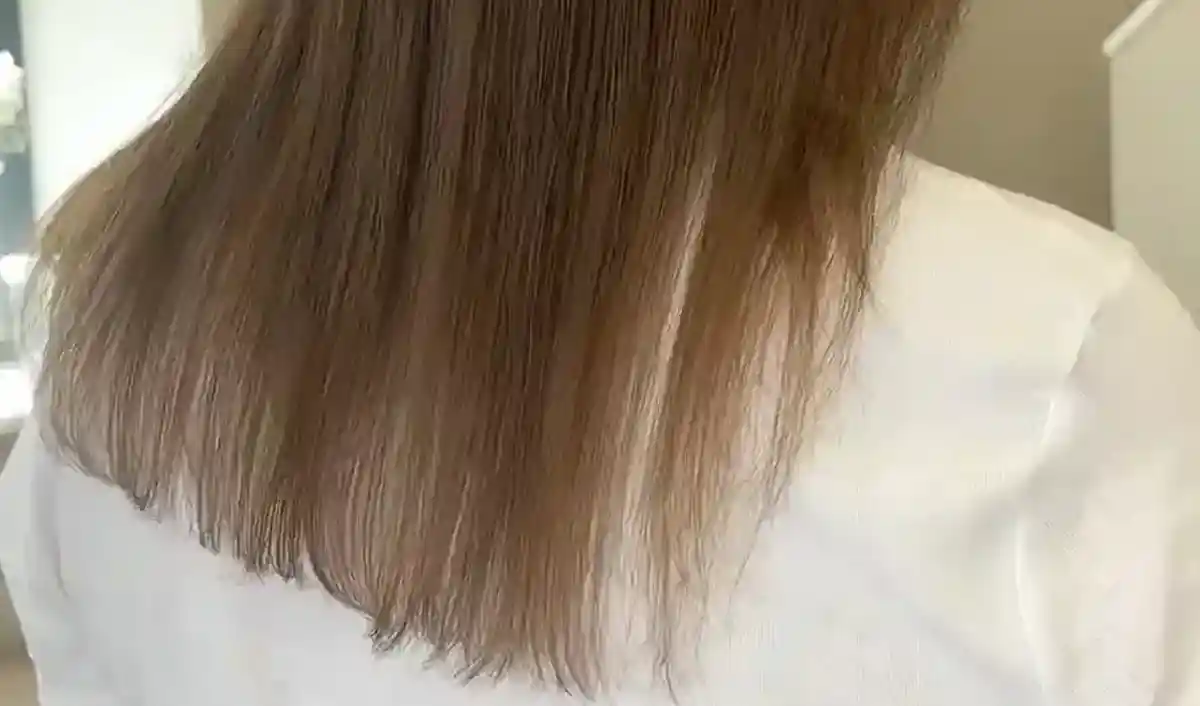
Perimenopause and Hair Loss: What Happens to Your Hair After 40
You've always had good hair. Thick, manageable, reliably yours. Then somewhere in your early forties, things start to shift. The texture feels different. Your ponytail seems thinner. There's more hair in the shower drain than you remember. Welcome to perimenopause – the hormonal transition that affects virtually every woman, yet rarely gets discussed when it comes to one of its most visible symptoms: hair loss.
If you're noticing changes to your hair and wondering whether perimenopause is to blame, you're not imagining things. Hormonal fluctuations during this phase can significantly impact hair density, texture, and growth patterns. The good news? Understanding what's happening is the first step to taking back control – and there are elegant solutions to help you look and feel like yourself throughout this transition.
Hair Extension Specialist & Founder of FAKE
With over 13 years of experience specialising in keratin bond and micro ring hair extensions, Kylie has helped countless clients navigate hormonal hair changes during perimenopause and menopause. Certified in advanced extension techniques and passionate about gentle solutions for fragile hair, she brings expert care to North Yorkshire.
What Is Perimenopause – and When Does It Start?
Perimenopause is the transitional phase leading up to menopause, when your ovaries gradually begin producing less oestrogen. While menopause itself is defined as the point when you haven't had a period for 12 consecutive months, perimenopause can begin much earlier – often in your early to mid-40s, though for some women it starts in the late 30s.[1]
This transition typically lasts between four and eight years, during which hormone levels fluctuate unpredictably.[2] One month your oestrogen might surge; the next it might plummet. It's this hormonal rollercoaster that triggers many of the symptoms associated with perimenopause – hot flushes, mood changes, irregular periods, and yes, significant changes to your hair.
The average age of menopause in the UK is 51, which means most women spend a substantial portion of their 40s navigating perimenopause.[3] During this time, your hair may undergo transformations that feel sudden and alarming, even though the underlying hormonal shifts have been building for years.
The Science: How Hormones Affect Your Hair
To understand perimenopausal hair loss, you first need to understand the relationship between hormones and hair growth. Your hair isn't just sitting passively on your head – it's a dynamic, hormone-sensitive organ that responds to the chemical signals coursing through your body.
The Role of Oestrogen
Oestrogen is your hair's best friend. This hormone extends the anagen (growth) phase of the hair cycle, which means strands stay attached to the follicle longer, growing thicker and more lustrous.[4] Oestrogen also helps maintain hair's moisture levels and keeps the scalp healthy.
When oestrogen levels begin to decline during perimenopause, several things happen:
- Shortened growth phase: Hair doesn't grow as long before falling out
- Reduced hair diameter: Individual strands become finer
- Decreased sebum production: The scalp becomes drier, affecting hair texture
- Slower regrowth: Hair takes longer to replace itself after shedding
The Androgen Effect
As oestrogen declines, the ratio between oestrogen and androgens (male hormones like testosterone, which women also produce) shifts. Even though androgen levels may remain the same or even decrease slightly, their effects become more pronounced relative to oestrogen.[5]
This shift can lead to:
- Androgenetic alopecia: A pattern of thinning similar to male-pattern baldness, often concentrated at the crown and along the parting
- Miniaturisation of follicles: Hair follicles shrink, producing progressively finer hairs
- Increased facial hair: Ironically, while scalp hair thins, some women notice more hair growth on the face and chin
Thyroid Disruption
Perimenopause can also affect thyroid function, and thyroid disorders become more common during this life stage.[6] Both hypothyroidism (underactive thyroid) and hyperthyroidism (overactive thyroid) can cause hair loss, adding another layer of complexity to perimenopausal hair changes. If you're experiencing significant hair loss, it's worth having your thyroid levels checked.
The Timeline: When Hair Changes Become Noticeable
One of the frustrating aspects of perimenopausal hair loss is its unpredictability. Unlike conditions that follow a clear progression, perimenopausal hair changes can vary enormously between women.
Early Perimenopause (Typically 40-44)
- Subtle changes in hair texture
- Slightly more hair in the brush
- Hair may feel less manageable or lose its natural wave/curl
- Increased dryness at the ends
Mid-Perimenopause (Typically 45-48)
- More noticeable thinning, particularly at the temples and crown
- Widening of the parting
- Hair takes longer to grow
- Increased breakage and brittleness
- Grey hairs become more prominent (reduced melanin production)
Late Perimenopause (Typically 49-52)
- Significant overall reduction in hair density
- Visible scalp through the hair
- Changed hair texture – straight hair may become wavy, or vice versa
- Hair may become wiry or coarse in places
Research suggests that up to 40% of women experience noticeable hair loss during and after menopause.[7] For many, the psychological impact is profound – hair is intrinsically linked to identity, femininity, and self-image.
Beyond Hormones: Contributing Factors
While hormonal changes are the primary driver of perimenopausal hair loss, several other factors can exacerbate the problem:
Stress and Cortisol
Perimenopause is often a stressful life stage. Women in their 40s and 50s are frequently juggling demanding careers, ageing parents, teenagers, and relationship changes – all while their bodies are undergoing significant hormonal shifts. This stress triggers elevated cortisol levels, which can push more hair follicles into the telogen (resting) phase, leading to increased shedding known as telogen effluvium.[8]
Nutritional Deficiencies
Declining oestrogen affects nutrient absorption, and many perimenopausal women become deficient in key hair-health nutrients:[9]
- Iron: Essential for oxygen delivery to hair follicles
- Vitamin D: Plays a role in hair follicle cycling
- B vitamins: Critical for energy production in fast-growing cells like hair
- Zinc: Supports tissue repair and protein synthesis
- Protein: The building block of keratin, your hair's primary structure
Reduced Blood Flow
Oestrogen helps maintain healthy blood vessel function. As levels decline, circulation to the scalp can diminish, meaning hair follicles receive fewer nutrients and less oxygen – hampering their ability to produce strong, healthy hair.[10]
Accumulated Damage
By the time you reach perimenopause, your hair has typically endured decades of styling, colouring, and heat exposure. The cumulative damage becomes more apparent when hair is already compromised by hormonal changes.
What You'll Notice: Common Perimenopausal Hair Symptoms
Every woman's experience is unique, but here are the most commonly reported hair changes during perimenopause:
1. Overall Thinning
Unlike male-pattern baldness, which creates distinct bald patches, female-pattern hair loss typically presents as diffuse thinning across the entire scalp. You might notice your ponytail feels thinner, your clips no longer grip as well, or you can see more scalp when your hair is parted.
2. Texture Changes
Many women report their hair texture changing dramatically during perimenopause. Previously straight hair might develop waves or frizz. Curly hair might become limp. Hair that was once soft and silky might feel coarser or more wiry.
3. Increased Dryness
With reduced oestrogen comes reduced sebum production. The natural oils that kept your hair conditioned diminish, leaving hair feeling dry, brittle, and more prone to breakage.
4. Slower Growth
Hair grows more slowly during perimenopause, and the maximum length it can achieve decreases. If you're used to growing your hair long, you might notice it no longer reaches the lengths it once did.
5. Changes at the Hairline
Some women notice thinning specifically at the temples and around the face, creating a recession of the hairline that can feel particularly distressing as it's highly visible.
6. Scalp Sensitivity
The scalp may become more sensitive, dry, or itchy during perimenopause. Some women develop dermatitis or dandruff for the first time.
What You Can Do: Managing Perimenopausal Hair Loss
While you cannot stop the hormonal changes of perimenopause, you can take steps to support your hair through this transition:
Medical Interventions
- HRT (Hormone Replacement Therapy): For some women, HRT can help stabilise hormone levels and reduce hair loss, though it's not effective for everyone and requires careful discussion with your GP.[11]
- Topical Minoxidil: The only FDA-approved treatment for female-pattern hair loss, minoxidil can help extend the growth phase and stimulate follicles.[12]
- Blood tests: Rule out thyroid disorders, iron deficiency, and other conditions that might be contributing to hair loss.
Nutritional Support
- Focus on protein-rich foods (hair is 95% protein)
- Consider supplements for iron, vitamin D, B vitamins, and omega-3 fatty acids
- Stay hydrated – dehydration shows in hair quality
- Limit alcohol and caffeine, which can affect nutrient absorption
Gentle Hair Care
- Switch to sulphate-free, hydrating shampoos
- Reduce heat styling frequency
- Avoid tight hairstyles that put tension on fragile hair
- Use a silk pillowcase to reduce friction
- Be gentle when brushing wet hair
Stress Management
- Prioritise sleep – your hair regenerates during deep sleep
- Consider meditation, yoga, or other stress-reduction practices
- Set boundaries to protect your mental health
An Elegant Solution: Keratin Bond Extensions for Perimenopausal Hair
While lifestyle changes and medical treatments can help, they take time – often many months – to show results. In the meantime, you deserve to look in the mirror and see the version of yourself that makes you feel confident and empowered. Our specialist perimenopause hair extensions service addresses exactly this need.
This is where keratin bond hair extensions offer a truly elegant solution. Unlike bulky alternatives, keratin bonds are specifically suited to fine or thinning hair because they're:
Lightweight: Each individual bond weighs a fraction of a gram, distributing weight evenly across your scalp without putting strain on fragile perimenopausal hair.
Invisible: The bonds are tiny – roughly the size of a grain of rice – and placed strategically on the underlayers of your hair. You can wear your hair up, down, or any way you like with complete confidence.
Natural: Made from keratin protein (the same substance as your hair), these bonds are gentler on your natural hair than methods involving metal rings or adhesive tapes.
Bespoke: At FAKE, every set is hand-blended and colour-matched to your exact shade – including greys if you're embracing them. No off-the-shelf solutions; just hair that looks completely, convincingly yours.
Why Keratin Bonds Excel for Hormonal Hair Loss
When hair is already compromised by hormonal changes, the extension method matters enormously. Heavy wefts or bulky tape extensions can put damaging tension on weakened follicles, potentially accelerating hair loss – the opposite of what you want.
Keratin bonds work differently. Applied strand by strand, they allow your stylist to:
- Work around areas of particular thinning
- Concentrate volume where you need it most
- Avoid placing any bonds on hair that's too fine or fragile
- Create a completely customised result
The bonds themselves are gentle – they don't require harsh chemicals for application or removal, and they flex naturally with your hair's movement.
Concerned About Perimenopausal Hair Changes?
Book a complimentary consultation to discuss your options. We'll assess your hair's current condition and create a bespoke plan to restore your confidence.
Free consultation • No obligation • Expert guidance
The Psychological Impact: Why Hair Loss Hits Hard
Let's be honest about something that doesn't get discussed enough: losing your hair during perimenopause can be emotionally devastating. In a society that already marginalises women as they age, watching your hair thin can feel like another loss of identity, femininity, and visibility.
Research shows that hair loss in women is associated with significant psychological distress, including anxiety, depression, and reduced quality of life.[13] Unlike men, for whom some degree of hair loss is culturally normalised, women often feel they're dealing with a secret shame.
This is precisely why finding solutions matters. Not because there's anything wrong with thinning hair, but because you deserve to feel comfortable and confident in your own skin – at every age. If extensions help you bridge the gap while your hormones settle, that's not vanity; it's self-care.
Looking Ahead: Hair After Menopause
Here's an encouraging truth: for many women, hair stabilises once they're through menopause and hormone levels settle at their new baseline. The dramatic fluctuations of perimenopause give way to a steadier state, and while hair may not return to its pre-perimenopausal fullness, the active shedding often slows significantly.
This means that extensions can serve as a transitional solution – supporting you through the most challenging years of hormonal upheaval, while your natural hair adjusts to its new normal. Many of our clients find that after a few years, they need less extension hair as their own hair stabilises and they've found a look that works for their new texture and density.
Conclusion: Navigating Perimenopause with Confidence
Perimenopause is a significant life transition, and hair changes are one of its most visible manifestations. Understanding that what you're experiencing is hormonally driven – not imagined, not your fault – is the first step to addressing it.
Whether you choose medical intervention, lifestyle modifications, extensions, or a combination of approaches, the goal is the same: feeling like yourself. At FAKE, we specialise in helping women navigate exactly this transition, providing bespoke, hand-blended keratin bond extensions that restore volume and confidence without compromising the health of your natural hair.
Your hair doesn't define you – but feeling good about it certainly contributes to how you move through the world. And you deserve to move through every stage of life with confidence.
View our transformation gallery to see real results from clients navigating hormonal hair changes, or book a consultation to discuss your individual situation.
References
- [1]
- [2]The Menopause Charity "Perimenopause" (2024) Available at: https://www.themenopausecharity.org/information/perimenopause/
- [3]
- [4]British Journal of Dermatology "The role of androgens and estrogens in hair growth" (2022) Available at: https://academic.oup.com/bjd/article/186/2/227/6519147
- [5]International Journal of Women's Dermatology "Female pattern hair loss: A clinical and pathophysiological review" (2020) Available at: https://www.sciencedirect.com/science/article/pii/S2352647520300271
- [6]British Thyroid Foundation "Thyroid Disorders and the Menopause" (2024) Available at: https://www.btf-thyroid.org/thyroid-disorders-and-the-menopause
- [7]British Association of Dermatologists "Female Pattern Hair Loss" (2023) Available at: https://www.bad.org.uk/patient-information-hub/female-pattern-hair-loss/
- [8]Journal of Clinical and Investigative Dermatology "Stress and the Hair Growth Cycle" (2021) Available at: https://www.ncbi.nlm.nih.gov/pmc/articles/PMC7920118/
- [9]Dermatology Practical & Conceptual "Diet and hair loss: effects of nutrient deficiency and supplement use" (2017) Available at: https://www.ncbi.nlm.nih.gov/pmc/articles/PMC5315033/
- [10]Menopause: The Journal of The North American Menopause Society "Estrogen, skin, and blood vessels" (2019) Available at: https://journals.lww.com/menopausejournal/pages/default.aspx
- [11]British Menopause Society "HRT Guide" (2024) Available at: https://thebms.org.uk/publications/tools-for-clinicians/hrt-guide/
- [12]
- [13]Journal of the European Academy of Dermatology and Venereology "Psychological impact of hair loss on women" (2019) Available at: https://onlinelibrary.wiley.com/journal/14683083