
Naturally Wavy Hair Extensions: Where Real European Curl Comes From
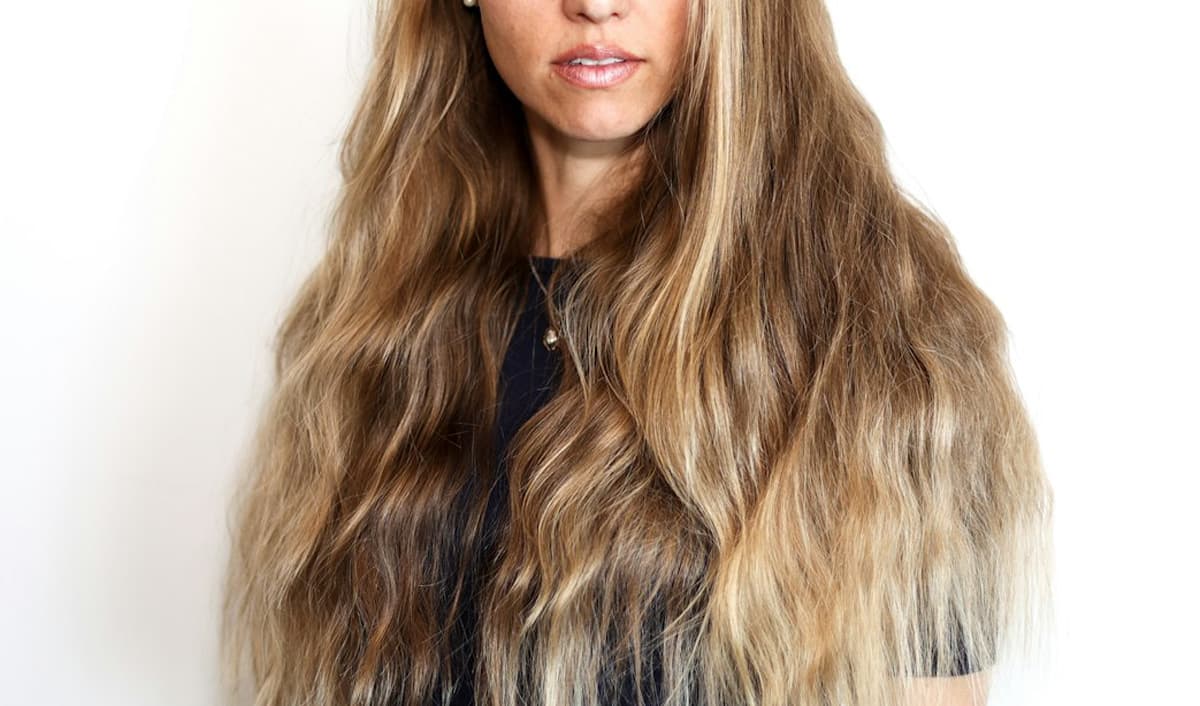
Naturally Wavy Hair Extensions: Where Real European Curl Comes From
Every conversation about curly and wavy extensions eventually gets to the same moment: someone explains that the reason this set will finally look like your hair is because of the hair itself. Not the technique, not the colour-blend. The raw material.
That's true, but it usually stops there. What "good hair" actually means, where it comes from, and why it costs what it costs is the part the industry tends to gloss over.
This post is the sourcing story. Where our naturally wavy and soft-curl stock is from, why it's genuinely rare, how every set gets prepared before it reaches a single bond, and why any of that matters for whether your extensions disappear into your hair or sit on top of it.
If you're looking for the practical guide (what we match, which method suits your hair, what it costs) that's in the complete curly hair extensions guide. If you're looking for the structural reasons permed alternatives fail, that's in why most curly hair extensions go straight. This post is about the hair itself.

Hair Extension Specialist & Founder of FAKE
With over 13 years of experience specialising in keratin bond and micro ring hair extensions, Kylie has completed over 5,000 individual fittings. She hand-blends and colour-matches naturally wavy and soft-curl Eastern European hair in-salon. FAKE serves North Yorkshire, County Durham and across the North of England.
What "Eastern European Hair" Actually Means
There's a lot of marketing language around European hair, and most of it is doing work it shouldn't be. So, specifics.
The hair we work with comes from single-donor ponytails sourced in Eastern European regions, where natural soft wave and loose curl occur at higher frequency than in most of the global donor supply. We can't guarantee that every ponytail was virgin hair, untouched by dye or heat before it was collected. What we can tell you is what the hair hasn't been through: it hasn't been put through the industrial processing that most commercial extensions go through. No acid baths to strip the cuticle. No silicone coatings to re-seal it. No perming or steam-processing to fake a texture.
Compared to the Asian-origin hair that dominates the global extension market, European hair has an oval rather than round cross-section, a finer average strand diameter, and a lighter cuticle. That combination is what lets it carry a natural wave or curl, reflect light softly rather than glassily, and behave like the hair of a UK woman with soft-curl or wavy natural texture rather than like a different material laid next to it.
Why Natural Curl in European Donors Is Rare
Naturally wavy and curly European hair is a minority trait, and that matters because it's the single biggest reason you can't just order it by the kilo.
The genetics are clear. Variants of the TCHH gene, which has the strongest single genetic influence on hair shape in European populations, favour straight hair at their highest frequency. Those frequencies are highest in the same regions where commercial donor hair is most efficiently collected.[1] The cheap, abundant supply is straight by design.
Natural wave and curl in Eastern European donors is a real but smaller population. Collection is slower. Matched, single-donor, single-length bundles in wave and soft-curl textures are rarer still. A supplier running a warehouse of pre-sorted, ready-to-ship stock isn't carrying much of this hair, because it can't be produced at that scale.
We work with it anyway, and in return for accepting the inefficiency, we get hair that behaves like the hair it's supposed to match.
The Practical Reality of Working with Rare Stock
Two things follow from that, and we're upfront about all of them at consultation:
Lead time. We keep a stock of curly and wavy hair, but specific matches (a particular wave pattern in a particular colour at a particular length) sometimes require sourcing. That can take time. For most clients it's a week; for others it's longer. We tell you exactly what we're looking at when we see your hair.
Individuality. Every bundle of natural wavy or curly European hair is genuinely unique in length, pattern and tone. That's not marketing copy. It's a supply-chain reality we work with on every fitting. Two women with apparently similar hair still need hair sourced and blended individually, because the match is to one specific head.
Why We Hand-Blend Every Set in the Salon
This is the part most salons don't do.
Hair, in standard commercial supply, comes pre-packed into uniform bundles by suppliers, sorted by length, colour code and curl type, ready to be ordered and fitted. It's efficient, but it's blunt. It treats every client in a given colour category as identical to every other one, and every "chestnut brown" as identical to every other chestnut brown. It works passably for straight hair, where the margin of variation is small. It does not work for curly and wavy hair, where the variation is the whole point.
We build every set in the salon. That means selecting multiple single-donor ponytails within range of your natural tone and pattern, then blending them together to reflect the real variation across your own head. Most women have a tighter curl at the nape and a softer one at the crown, or a slightly warmer tone at the mid-lengths and a cooler one at the roots. A single pre-packed bundle can't match that. A hand-blended set pulled from several ponytails can.
This is also where the colour matching work happens. Where the blended ponytails on their own don't quite land the match, we tone in-salon, applied where needed rather than as a single block dye across the whole set. See our colour matching guide for the full walkthrough.
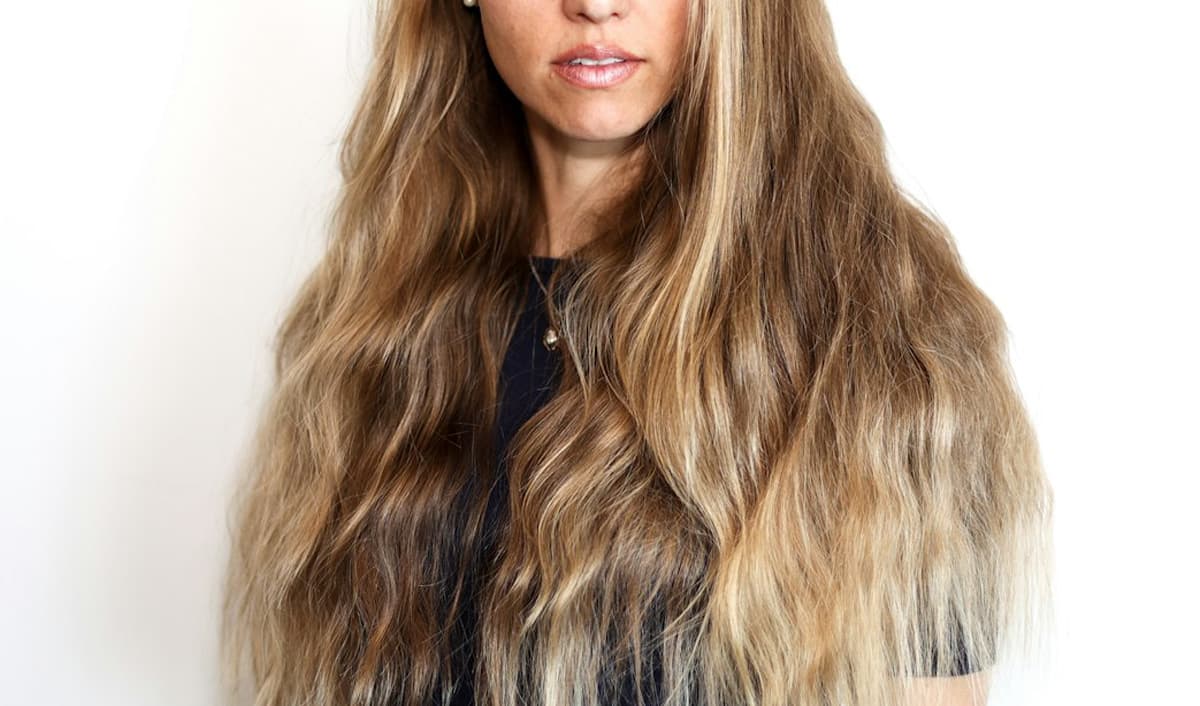
Every set is hand-blended in the salon from multiple ponytails, with toning applied where needed to match one specific head.
The Payoff: Longevity and Match
A properly fitted curly or wavy set runs 9–12 months of regular refits every 10–12 weeks. The match holds because it was built correctly at every stage: the raw material was right, the blend was specific to the client, the cut accommodated the curl's natural behaviour. Nothing was imposed on the hair that it has to work its way back from.
A set built on chemically textured stock is a different economic proposition. The curl relaxes within weeks. The strand is structurally compromised from perming (and often bleaching too). Aftercare becomes a constant battle against a mismatch that was there from day one. We cover the structural reasons in why most curly hair extensions go straight. The short version is that the difference between "cheaper" and "actually cheaper" is how often you're paying for a set that doesn't last.
The Honest Scope
We source naturally wavy and soft-curl European hair. That covers wave through to medium ringlet, the range the vast majority of UK women with "curly" hair actually sit in.
We don't source tight corkscrew coils or 4A+ textures. Our Eastern European supply doesn't naturally carry that range, and we'd rather tell you honestly that we're not the right salon than fit you with something that doesn't truly match. If you're unsure where your curl sits, a consultation gives you a clear answer.
Want to See the Hair Before You Commit?
Book a free consultation. We'll match your hair in person, show you the stock we're working with, and give you an exact quote and timeline.
Free consultation • No obligation • Expert guidance
FAQ
What does "Eastern European hair" actually mean?
Single-donor ponytails sourced in Eastern European regions, with the oval cross-section, finer strand diameter and lighter cuticle that European hair carries naturally. It hasn't been through the industrial stripping and re-coating process that most Asian-origin extension hair goes through, which is what lets it behave like the hair of a UK woman with wavy or soft-curl texture.
Why is there sometimes a lead time before my set is fitted?
Because we're sourcing to match one specific head rather than pulling from pre-packed stock. Depending on your curl pattern, colour and length, the exact match may take a couple of weeks to assemble. We tell you the timeline at consultation.
How long does a hand-blended set last?
With proper aftercare, 9–12 months of regular refits every 10–12 weeks. Longevity follows directly from the quality of the initial match. A set built correctly from the raw material up has no compromise imposed on the hair.
References
- [1]Medland, S.E. et al. The American Journal of Human Genetics "Common Variants in the Trichohyalin Gene Are Associated with Straight Hair in Europeans" (2009) Available at: https://pmc.ncbi.nlm.nih.gov/articles/PMC2775823/ DOI: 10.1016/j.ajhg.2009.10.003
- [2]Dry Curl Cut Method Wavy Hair Care "Why dry cutting works for wavy and curly texture" (2024) Available at: https://wavyhaircare.com/dry-curl-cut-wavy-hair/